
Cleaning out old school supplies or office drawers often leaves you holding a stack of used notebooks, wondering about the eco-friendly option. Can you recycle notebooks with the spiral binding? The short answer is no. Placing an intact spiral-bound notebook in your curbside recycling bin is one of the most common recycling mistakes and can cause significant problems at the recycling facility.
This comprehensive guide will explain why, walk you through the correct steps for recycling each component, and offer creative ideas for giving old notebooks new life, ensuring you dispose of them responsibly.
Why You Can’t Recycle a Spiral Notebook Whole
Recycling facilities rely on machinery to sort and process materials. Each type of material—paper, plastic, metal—is processed differently.
- The Problem with Spiral Bindings (Metal or Plastic): These bindings are designed to be durable and are considered contaminants in the paper stream. They can jam the high-speed sorting machines, cause breakdowns, and even pose a safety risk to workers. A single intact notebook can contaminate an entire bale of paper, rendering it unrecyclable.
- The Issue with Mixed Materials: Recycling works best with single, clean material streams. A notebook is a classic example of a mixed-material item. The paper, adhesive on the covers, plastic coatings, and metal/plastic spiral must be separated to be processed correctly.
The Step-by-Step Guide to Recycling Spiral Notebooks
To recycle properly, you need to disassemble the notebook into its core components. Here’s a quick-reference guide to what to do with each part:
| Paper Pages | Recycle if clean. | Remove any plastic sheet protectors, stickers, or heavily glued pages. |
| Cardboard Covers | Recycle if plain. | Remove plastic coatings, thick layers of glue, or non-paper decorations. |
| Metal Spiral | Recycle with scrap metal. | Check local guidelines; often accepted if removed and bundled. |
| Plastic Spiral | Likely Trash. | Most curbside programs don’t accept this plastic type. |
| Plastic Sheet Protectors | Check for #1/#2 Plastic. | If clean and labeled, may be recyclable; otherwise, trash. |
Here is the detailed process for disassembly:
1. Remove the Binding:
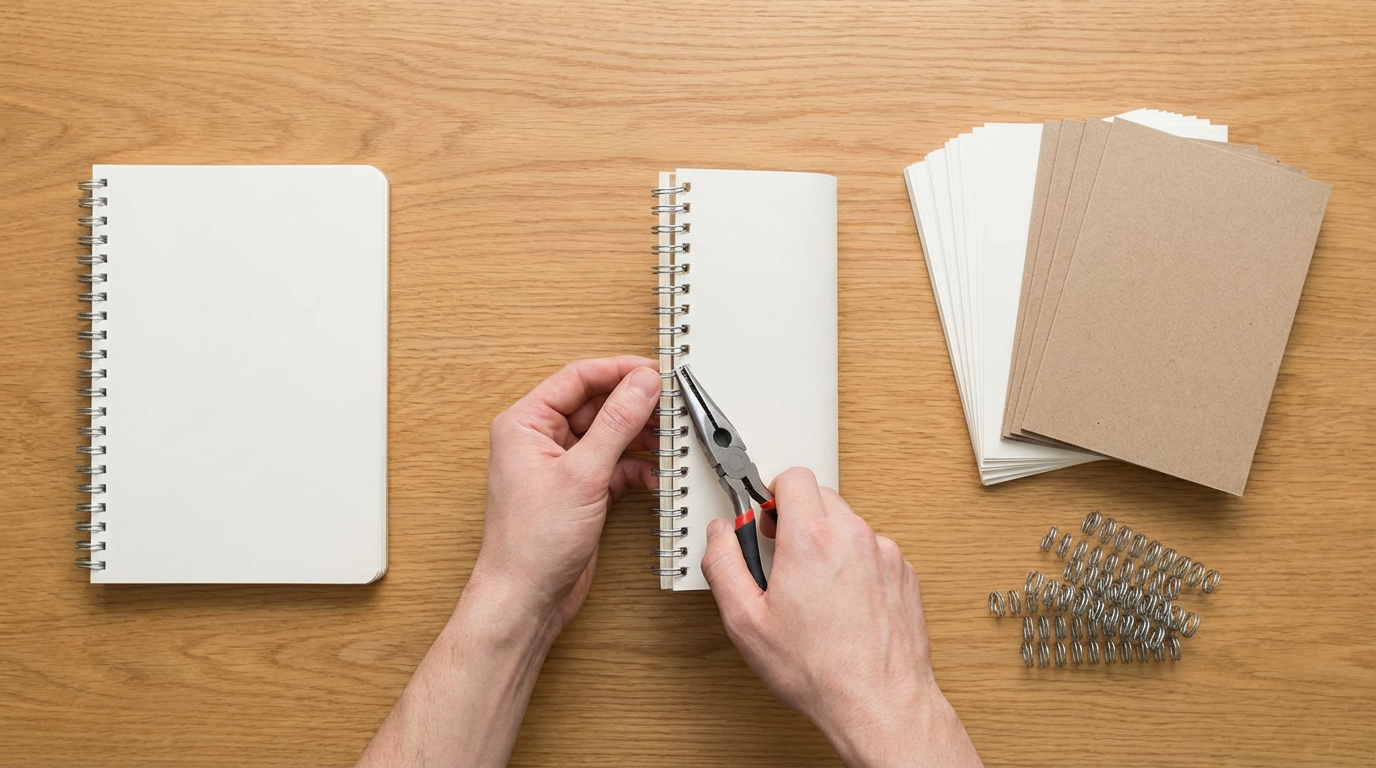
- Use a pair of needle-nose pliers to straighten the end of the spiral wire where it threads into the cover.
- Grip the end and twist/uncoil it to pull the entire wire out of the punch holes. For plastic comb bindings, you can carefully bend the prongs back to release the cover.
2. Prepare the Paper:
- Once the binding is removed, you have a stack of paper and two covers.
- Remove any non-paper items: This includes plastic sheet protectors, laminated dividers, glued-in folders, or large stickers. These go in the trash unless specifically recyclable.
- Check the paper: If pages are filled with standard pencil, ink, or highlighters, they are typically acceptable for recycling. Pages saturated with paint, wax crayon, or glue may need to be discarded.
3. Prepare the Covers:
- If the covers are simple matte cardboard with minimal ink, they can be recycled with mixed paper.
- If they have a glossy plastic laminate, thick padding, or extensive metal/plastic elements, they likely belong in the trash. Try tearing a corner; if you see a plastic layer or foam, it’s not recyclable.
4. Sort the Final Components:
- Paper & Cardboard: Place in your curbside recycling bin.
- Metal Spiral: Many municipalities accept small metal items. Collect several, bundle them together with a twist tie, and place them in your bin. When in doubt, call your local waste authority.
- Plastic Spiral/Comb: This is usually #5 polypropylene plastic, which is rarely accepted curbside. It should be placed in the trash unless you find a specialized recycler.
- Non-Recyclable Elements: Place plastic coatings, adhesives, and contaminated paper in the garbage.
Creative Reuse: Giving Notebooks a Second Life Before Recycling
Before you disassemble, consider if any parts can be reused. This is the most sustainable option of all!
- For Partially Used Notebooks: Tear out the used pages. The remaining fresh paper can be used as a scratch pad, shopping list, or drawing book for kids.
- Upcycle the Covers: The sturdy cardboard covers make excellent bookmarks, sturdy drawer organizers, or the base for DIY picture frames.
- Repurpose the Binding: A cleaned metal spiral can be bent into a unique hook, a holder for kitchen utensils, or integrated into a craft project.
- Donate: Schools, community centers, or arts organizations may welcome donations of lightly used notebooks or spare paper for their programs.
The Bigger Picture: Choosing Sustainable Notebooks
To avoid this dilemma in the future, consider these eco-friendly alternatives when shopping for your next notebook:
- Spiral-Free Designs: Look for notebooks bound with glue (perfect binding) or stitching. These are much easier to recycle as the entire book can often go straight into the paper bin.
- Recycled Content: Choose products made from 100% post-consumer recycled paper.
- Alternative Materials: Explore notebooks made from stone paper, bamboo, or agricultural waste, which have different sustainability profiles.
- Refillable Systems: Invest in a nice binder or a disc-bound system where only the paper inserts are replaced, eliminating waste from covers and bindings.
Frequently Asked Questions (FAQs)
1. What if the notebook has a plastic spiral instead of metal?
The process is similar, but the plastic spiral (usually #5 plastic) is almost never accepted in curbside recycling. After removal, it must be thrown in the trash unless you can find a local program that accepts that plastic type.
2. Are the shiny, glossy covers recyclable?
Typically, no. The glossy finish is usually a thin plastic laminate fused to the cardboard. This mixed material cannot be processed by paper mills. When in doubt, the “tear test” is a good guide.
3. Can I recycle notebooks with colored or decorated pages?
Yes, standard colored paper is recyclable. The concern is with coatings, not dyes. Pages with glitter, heavy wax, or plastic-like coatings should be removed and trashed.
4. What about notebooks with plastic sheet protectors or folders inside?
These must be removed and separated. The paper goes in recycling. Clean plastic sheet protectors (often #1 or #2 PET) might be recyclable if your program accepts them—check the plastic resin code.
5. Is it worth the effort to take notebooks apart for recycling?
Absolutely. When non-recyclable bindings contaminate paper bales, entire loads can be sent to landfill. Your few minutes of effort ensure the valuable paper fiber is recovered and keeps recycling systems running smoothly.
6. What should I do with notebooks that have water damage or mold?
Unfortunately, these should go directly in the trash. Contaminated paper cannot be recycled and can spoil clean, recyclable material.
7. Are there any stores or programs that take old notebooks for recycling?
Some office supply stores, like Staples, offer in-store recycling programs for various materials, including binders and sometimes notebooks. It’s always best to call your local store ahead of time to confirm.
Conclusion
While you cannot simply toss a spiral-bound notebook into the recycling bin, you can absolutely recycle its core components with a small amount of effort. By taking five minutes to remove the binding and separate the materials, you ensure that valuable paper is recovered and avoid contaminating the recycling stream.
The most sustainable notebook, however, is the one you fully use and then either repurpose or correctly dismantle. By making informed choices about both disposal and future purchases, you contribute to a cleaner recycling system and a more circular economy. Before you buy your next notebook, consider its end-of-life journey—your planet will thank you.