
If you’ve just upgraded to a sleek stainless steel refrigerator, you might be wondering if you can still use it as a family photo gallery or a place for handy magnetic kitchen tools. The answer is it depends entirely on the type of stainless steel. This definitive guide will explain the science, show you how to test your fridge, and provide clever solutions for any result.
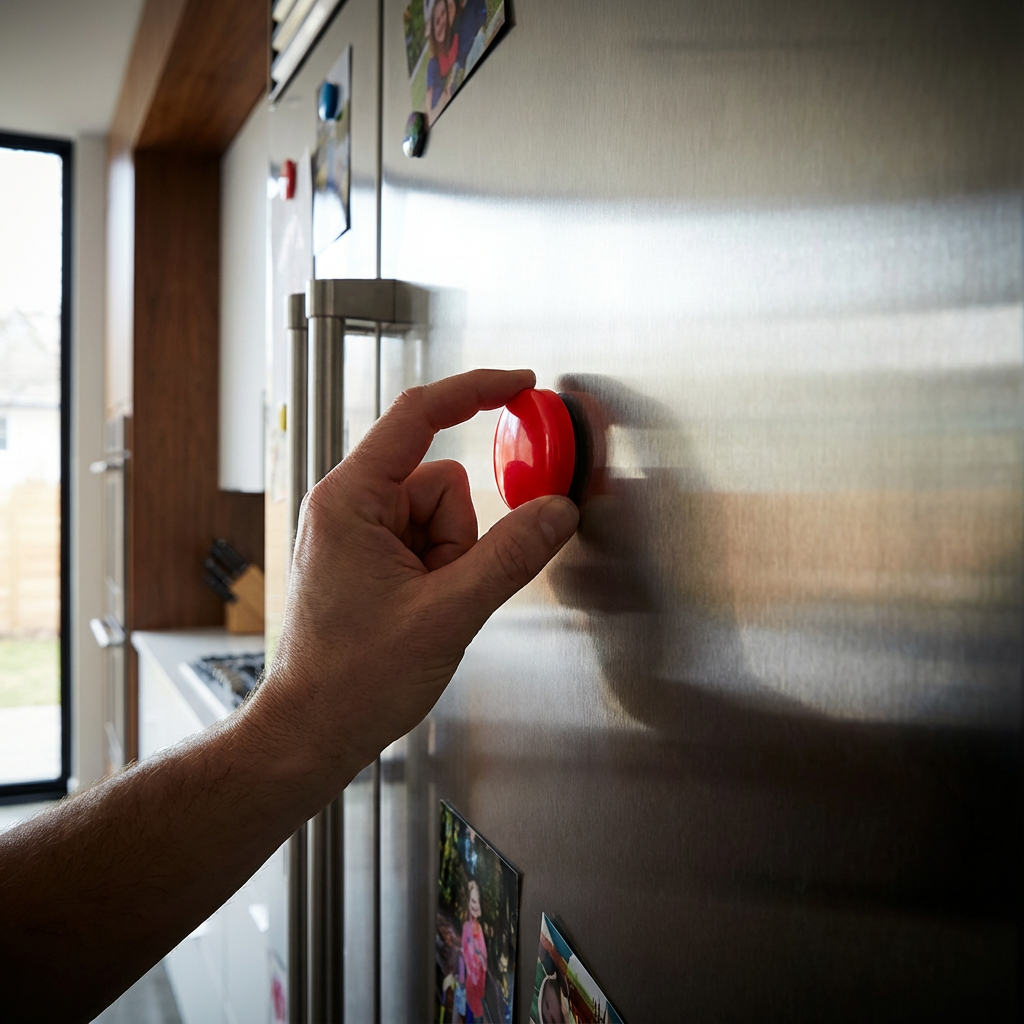
The Short Answer: Yes, But Not Always
The magnetic mystery of your fridge boils down to metallurgy. Stainless steel is an iron alloy, and its magnetic property depends on its crystalline structure.
- If your fridge is magnetic, it is likely made from a ferritic or martensitic grade of stainless steel (like the common 430 grade). These types contain more iron and have a structure that magnets find attractive.
- If your fridge is non-magnetic, it is almost certainly made from an austenitic stainless steel (like the very popular 304 grade). This type has a different atomic structure that is generally non-magnetic, giving it superior corrosion resistance and a consistent finish, which is why premium appliance brands often use it.
Note: Looking for a practical solution? Explore our custom fridge magnets, designed to work on various surfaces while adding a personalized touch to your kitchen or workspace.
How to Test if Magnets Stick to Your Fridge
Don’t guess—test! Grab a standard refrigerator magnet (a simple flat one works best) and try these steps:
- Start Simple: Place the magnet on a flat, clean area of the door. If it sticks firmly, you have a magnetic stainless steel fridge. Congratulations, you’re good to go!
- Check the Sides: If the magnet slides off the front, try the side panels or the back of the fridge. Some manufacturers use different grades of steel for different parts.
- Use a Stronger Magnet: If a weak decorative magnet doesn’t hold, try a rare earth magnet (like a neodymium magnet). These are incredibly strong and may hold on very slightly magnetic surfaces.
Clever Solutions for Non-Magnetic Fridges
A non-magnetic surface doesn’t mean you have to abandon your decorative or functional plans. Here are effective, damage-free solutions:
1. Adhesive Magnetic Sheets or Tape
This is the most versatile fix. You can apply strong double-sided tape, adhesive magnetic sheets, or magnetic tape directly to the back of your non-magnetic items. Once these adhesives are on your items, they will stick to the stainless steel surface. This works great for lightweight photos, notes, and children’s artwork.
2. Specialty Adhesives for Heavy Objects
For heavier items like magnetic knife strips, paper towel holders, or large organizers, use a high-strength mounting tape like VHB (Very High Bond) tape or a specialty adhesive gel. Always ensure the product is safe for use on stainless steel and can hold the intended weight.
3. Over-the-Door Organizers
Utilize space without touching the front surface. Over-the-door baskets, racks, or caddies can hold spices, wraps, or cleaning supplies. For a magnetic look, you can place a thin magnetic board on top of the fridge or on an adjacent wall and use that as your display center.
Important Considerations & Best Practices
To keep your investment looking pristine, follow these tips:
- Avoid Scratches: Even if magnets stick, dragging them across the surface can cause fine brush marks or scratches. Always place and lift magnets straight on and off.
- Prevent Residue: Cheap magnets or adhesives can leave behind a gummy residue or even rust stains if they get wet. Use high-quality, coated magnets and check them periodically.
- Clean Regularly: Fingerprints and smudges are the real challenge with stainless steel. Clean the area under magnets regularly with a microfiber cloth and a cleaner designed for stainless steel to prevent uneven wear or “ghosting.”
Frequently Asked Questions (FAQs)
1. Will magnets damage my stainless steel fridge?
Generally, no. However, sand or grit trapped under a magnet can act like sandpaper and scratch the finish when the magnet is moved. Also, low-quality magnets with iron exposed to moisture can leave rust stains.
2. My old magnets don’t stick to my new stainless fridge. Why?
You’ve likely upgraded from a refrigerator with a painted steel door (which is always magnetic) to one with genuine austenitic (non-magnetic) stainless steel. This is a sign of a higher-grade appliance finish.
3. Are there specific magnets that work better on stainless steel?
Yes. Rare earth neodymium magnets are the strongest type for consumer use. For decorative purposes, look for magnets that specify strong holding power and have a full, flat surface to maximize contact.
4. Can I make my non-magnetic fridge magnetic?
You cannot change the metal’s property, but you can add a magnetic surface. Installing a large, thin magnetic bulletin board or sheet (attached with safe adhesives) creates a dedicated magnetic area without modifying the appliance.
5. Is the non-magnetic type of stainless steel better?
It’s often considered more premium. Austenitic stainless steel (like Grade 304) is typically more corrosion-resistant and offers a more uniform, non-marketing finish, which is why it’s preferred for high-end kitchens.
6. Do magnetic appliance covers (for dishwashers, etc.) use the same principle?
Yes. These covers often have a flexible magnetic backing designed to cling to the steel appliance front. They work on the same magnetic grades as your fridge.
Conclusion
So, can you put magnets on a stainless steel fridge? First, perform the magnet test. If it sticks, you can decorate freely with care. If it doesn’t, embrace the sleek, uncluttered look or use the clever adhesive and organizational solutions outlined above. Understanding the “why” behind the behavior of your appliance empowers you to personalize your kitchen wisely while protecting your valuable investment.