
You settle in with a cup of tea, pour out a cascade of cardboard pieces, and begin the quiet hunt for edges and colors. While it feels like a peaceful escape, something remarkable is happening in your brain. Beyond being a beloved hobby, assembling a jigsaw puzzle is a full-scale cognitive workout, a form of moving meditation, and a potential ally for long-term brain health. This article explores the compelling science and the profound personal benefits behind this timeless activity, revealing why reaching for a puzzle is one of the best things you can do for your mind.
Scientists have found that the simple act of fitting puzzle pieces together engages nearly every cognitive ability we possess, from visual perception to logical reasoning.
The Cognitive Gymnasium: Sharpening Your Mental Faculties
Engaging with a jigsaw puzzle is far from passive. It demands a symphony of cognitive skills, effectively turning your coffee table into a brain-training center.
1. Boosting Memory, Speed, and Visuospatial Reasoning
The process of sorting, searching, and fitting pieces directly strengthens short-term memory and mental speed. You must remember the shape of a piece you saw minutes ago, the color of a sky segment, or the location where a particular pattern might fit. This constant recall reinforces neural connections, keeping your mind agile.
Furthermore, puzzles are a master class in visuospatial reasoning—the ability to visualize, manipulate, and orient objects in space. This skill, essential for tasks like reading a map, parking a car, or arranging furniture, is honed each time you rotate a piece in your mind’s eye to test its fit.
2. Engaging Both Hemispheres and Problem-Solving Skills
Puzzling uniquely recruits both sides of your brain. The logical left hemisphere analyzes pieces, sorts by system, and applies linear reasoning. Simultaneously, the creative right hemisphere sees the big picture, recognizes patterns and colors, and exercises intuitive leaps. This bilateral engagement promotes whole-brain integration.
Every puzzle is a series of small problems to solve. This process enhances critical thinking, adaptive reasoning, and flexible strategy development. You learn to approach challenges from different angles, a skill that translates directly to professional and personal problem-solving.
3. Supporting Long-Term Brain Health and Cognitive Reserve
Perhaps the most significant benefit is the contribution to cognitive reserve—the brain’s resilience to age-related decline or damage. Observational studies suggest that regularly engaging in mentally stimulating activities like puzzles is associated with sharper brain function in later life and may even help delay the onset of cognitive decline.
A landmark 2018 study published in Frontiers in Aging Neuroscience found that lifetime engagement in jigsaw puzzling was strongly correlated with superior visuospatial cognitive abilities, acting as a protective factor for the aging brain. While puzzles are not a magic bullet against conditions like dementia, they are a powerful component of a brain-healthy lifestyle.
Beyond Cognition: The Emotional and Social Rewards
The benefits of puzzling extend far beyond sharp intellect, offering profound rewards for emotional well-being and social connection.
- A Natural Stress Reliever and Mood Booster: The focused attention required creates a meditative state, lowering stress levels, heart rate, and blood pressure. This focused flow acts as a “psychological time out” from daily anxieties. Each time you successfully place a piece, your brain releases dopamine, a neurotransmitter that regulates mood and brings feelings of happiness, accomplishment, and motivation.
- A Sanctuary of Mindfulness and Digital Detox: In our over-stimulated, screen-dominated world, puzzles offer a rare opportunity for screen-free relaxation. The tactile, analog nature of the activity grounds you in the present moment, fulfilling the core principle of mindfulness. It provides a calming ritual that can improve focus and even lead to better sleep by replacing pre-bed blue light with gentle mental engagement.
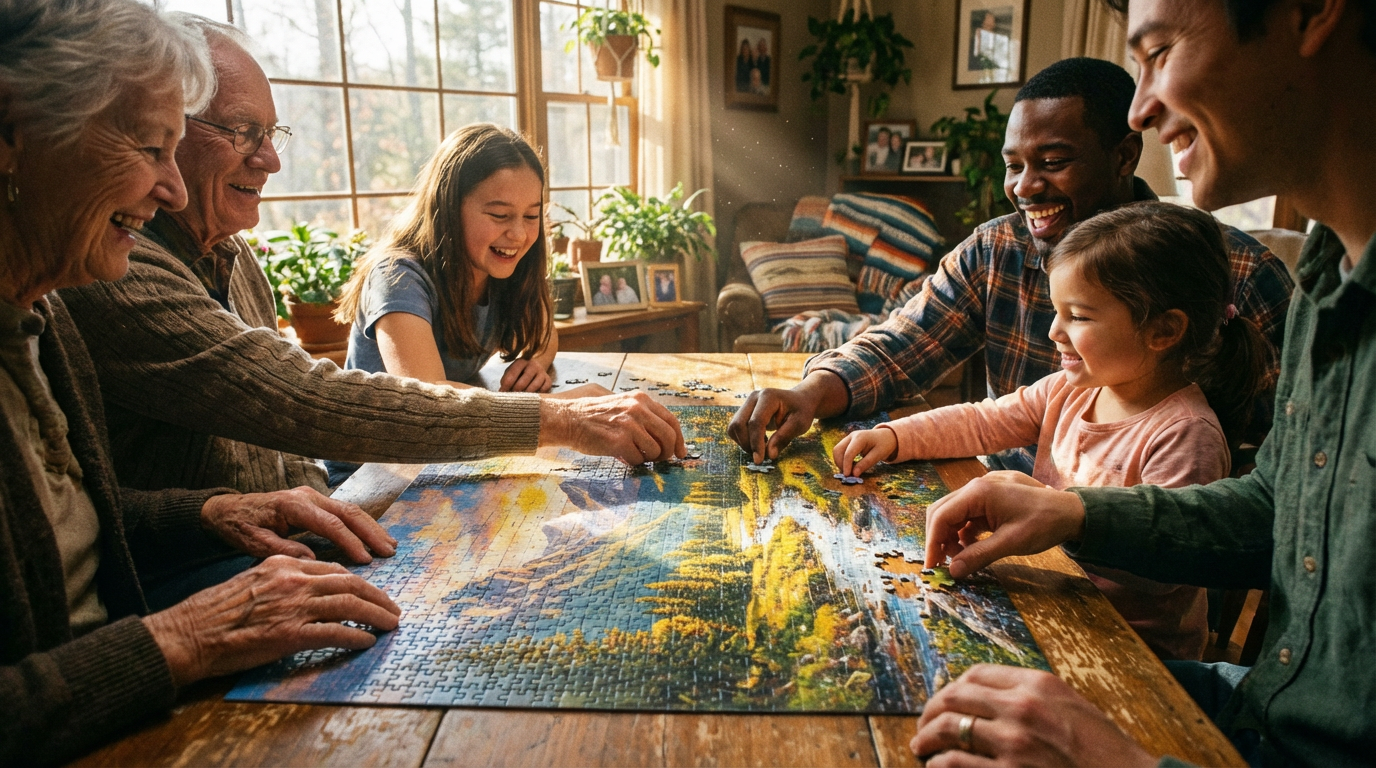
- A Bridge for Social Connection: While often a solo pursuit, puzzling is a wonderful social activity. A shared puzzle on a family table or at a gathering with friends fosters teamwork, conversation, and a sense of shared accomplishment without the pressure of constant talking. It’s a gentle way to connect and collaborate.
Choosing Your Puzzle: Maximizing the Benefits
To get the most from your puzzling experience, consider these tips:
- Find the Right Challenge: The key is a puzzle that is engaging but not frustrating. If it’s too easy, your brain isn’t stimulated; if it’s impossibly hard, it becomes stressful. Gradually increase piece count and complexity to keep your skills growing.
- Create a Dedicated Space: A dedicated puzzle table or board allows you to leave work in progress, making it easier to return for short, daily brain-training sessions.
- Make It a Ritual: Consistency matters. Even 20-30 minutes of puzzling a few times a week can yield benefits. Pair it with your morning coffee or evening wind-down routine.
- Prioritize Quality and Joy: The experience is greatly enhanced by a well-made puzzle. High-quality materials ensure pieces fit snugly and withstand repeated use, while vibrant, precise printing makes pattern recognition a pleasure. Most importantly, choose images that you find truly beautiful or intriguing—your enjoyment is the best motivation to keep going.
Tengyue Gift: Crafting Puzzles for Mindful Moments
At Tengyue Gift, we understand that a jigsaw puzzle is more than a product; it’s a gateway to mental clarity, creative satisfaction, and precious moments of connection. We are committed to crafting puzzles that support this enriching experience.
We focus on the details that matter: superior cardboard stock for a perfect fit, finishes that reduce glare and protect the artwork, and a diverse selection of captivating images designed to engage and inspire puzzlers of all levels. We believe in providing not just a puzzle, but a high-quality tool for relaxation, cognitive exercise, and shared joy.
Explore our thoughtfully curated collections at https://www.tengyuegift.com/ and find the perfect puzzle to begin your journey toward a sharper, calmer, and more connected mind.
Frequently Asked Questions
Are jigsaw puzzles actually good for my brain?
Yes, extensive research shows they are. They engage multiple cognitive abilities including memory, visual-spatial reasoning, and problem-solving, acting as a comprehensive workout for the brain that can support long-term cognitive health.
How long should I puzzle to see benefits?
While there’s no strict rule, studies suggest that regular engagement is key. Even 20-30 minutes of focused puzzling several times a week can help sharpen your mind and provide stress relief. Consistency is more important than marathon sessions.
What’s the difference between doing puzzles and playing brain-training video games?
Both can be beneficial, but puzzles offer a unique, tactile, and screen-free experience. The physical handling of pieces enhances fine motor skills and provides a different kind of sensory engagement. Puzzles also often lead to a more relaxed, meditative state compared to the stimulating nature of many video games.
Can puzzles help prevent dementia or Alzheimer’s disease?
While no activity can guarantee prevention, a lifetime of engaging in mentally stimulating activities like puzzles is strongly associated with building cognitive reserve, which can help delay the onset of symptoms and support brain health as you age. They are a positive part of a brain-healthy lifestyle.
I get frustrated easily. Are puzzles still for me?
Absolutely. Start with a puzzle that has a clear, appealing image and a lower piece count than you think you can handle. The goal is enjoyable engagement, not endurance. The sense of accomplishment from completing a simpler puzzle can build your confidence to tackle more complex ones.
Are puzzles beneficial for children?
Yes, they are excellent for developing young minds. Puzzles help children develop spatial awareness, fine motor skills, patience, problem-solving strategies, and the ability to work toward a long-term goal.
Do puzzles help with anxiety?
Many people find them very helpful. The activity requires focused attention on a concrete, manageable task, which can divert your mind from cyclical worries and induce a calm, meditative state. The dopamine released with each small success also improves mood.
Is it better to puzzle alone or with others?
Both have value. Solitary puzzling offers deep focus and a personal sense of achievement. Group puzzling fosters social connection, teamwork, and shared enjoyment. Alternating between the two can provide a perfect balance of benefits.
Conclusion
Yes, jigsaw puzzles are far more than simple entertainment; they are a powerful, multifaceted tool for cognitive enhancement and emotional well-being. By engaging nearly every part of your brain, they provide a proven workout for memory, problem-solving skills, and visual-spatial reasoning, helping to build a resilient and agile mind for the long term.
Ultimately, choosing a puzzle is an investment in your mental health, offering a unique blend of focused challenge and meditative calm. To begin reaping these remarkable benefits, explore a world of captivating and high-quality puzzles designed for every skill level at tengyue gift, and discover the perfect piece to start your journey toward a sharper, more mindful self.